
Running a Sex Offender Check in Hot Spring County
The official Hot Spring County sex offender check starts with the Arkansas Sex Offender Notification System, the public registry managed through the Arkansas Crime Information Center. ACIC is the state layer. It is the source that applies Arkansas publication rules and lets a user search by address, city, county, ZIP code, place, or name. For a local pass, use Hot Spring as the county filter, then narrow the results by Malvern, Rockport, Perla, a ZIP code, or an address when those fields fit the question.
The Hot Spring County Sheriff's Office also publishes a local sex-offender disclaimer before its county list. That local screen is useful because the sheriff is the local law-enforcement office for many county registration contacts. It is not a full substitute for ACIC. The sheriff's notice says the local list may be incomplete and that address information may be wrong because of reporting or public-record errors.
The Hot Spring County sheriff's disclaimer is assigned to this page because it explains the local limits before a user opens the county list.
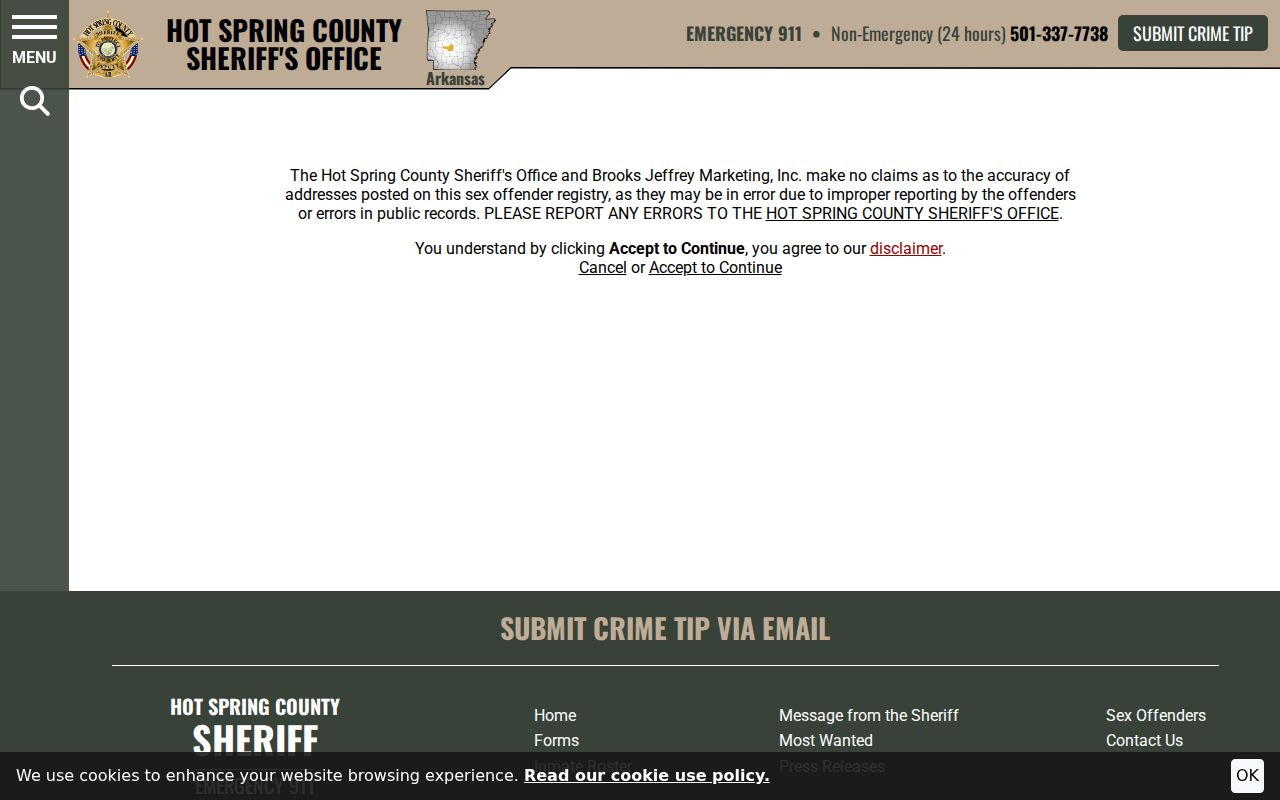
The image is a reminder that a local list can support a registry check, but it should not be treated as complete or certified by itself.
Hot Spring County Registration Contact
ACIC says a sex offender who moves to or returns to Arkansas must register with the local law-enforcement agency that has jurisdiction within three business days of establishing residence. In Hot Spring County, the sheriff's services identify a Sex Offender Registration Coordinator. The sheriff's office is at 215 E. Highland Ave., Suite 119, Malvern, AR 72104, and the administrative phone is 501-332-3671.
City jurisdiction can matter. A person inside Malvern or Rockport may need to verify the correct local law-enforcement office before assuming the county sheriff is the only contact. For public searchers, the practical point is simpler: the public registry is the search tool, while registration questions and suspected errors route to local law enforcement or ACIC.
Hot Spring County Sheriff's Office
Sex Offender Registration Coordinator
215 E. Highland Ave., Suite 119
Malvern, AR 72104
501-332-3671
Searching the Arkansas Sex Offender Registry
The Arkansas registry is built around several search paths. A name search helps when the person's name is known. An address, city, county, ZIP, or place search helps when the issue is proximity to a home, school route, workplace, or neighborhood. The registry displays publishable offenders within the map view for the entered area, subject to Arkansas risk-level publication rules.
- Open the Arkansas Sex Offender Notification System and review the registry conditions before searching.
- Choose a search path: name, address, city, county, ZIP code, or place. Use Hot Spring for the county field when the goal is countywide coverage.
- Review the map and list results. Match the profile carefully rather than relying on a name alone.
- Open the public profile and read the risk level, address, offense, agency, and status fields before taking any next step.
| Field Label | Type | Required | Notes |
|---|---|---|---|
| Address | Text or map search | Optional alternative | Shows publishable offenders in the entered map area. |
| City | Text or search filter | Optional alternative | Useful for Malvern, Rockport, Perla, or another local place. |
| County | Dropdown or search filter | Optional alternative | Use Hot Spring for the countywide search. |
| ZIP code | Text | Optional alternative | Helpful when a city boundary is not the best match. |
| Place | Text or search filter | Optional alternative | Arkansas.gov lists place search as a supported option. |
| Name | Text | Optional alternative | Use when the offender name is known. |
| Map view | Map/list control | Not required | Displays results in the searched area. |
County Map or Name Search
A Hot Spring County sex offender check can answer two different questions. A map search asks who is publicly listed near a location. A name search asks whether a specific person has a public registry profile. The two searches can produce different levels of confidence, so the best choice depends on the facts already known.
Use map, address, ZIP, city, or county fields when the location matters more than the person. Use a name search when identity is the main concern, but compare the profile fields with care. Common names can mislead. Address data can also lag when a registrant moves, reports late, or when a public record contains an error. The sheriff's disclaimer specifically asks users to report address errors to the Sheriff's Office.
The Arkansas public registry search form screenshot shows why users should think in terms of search fields rather than a single county list.
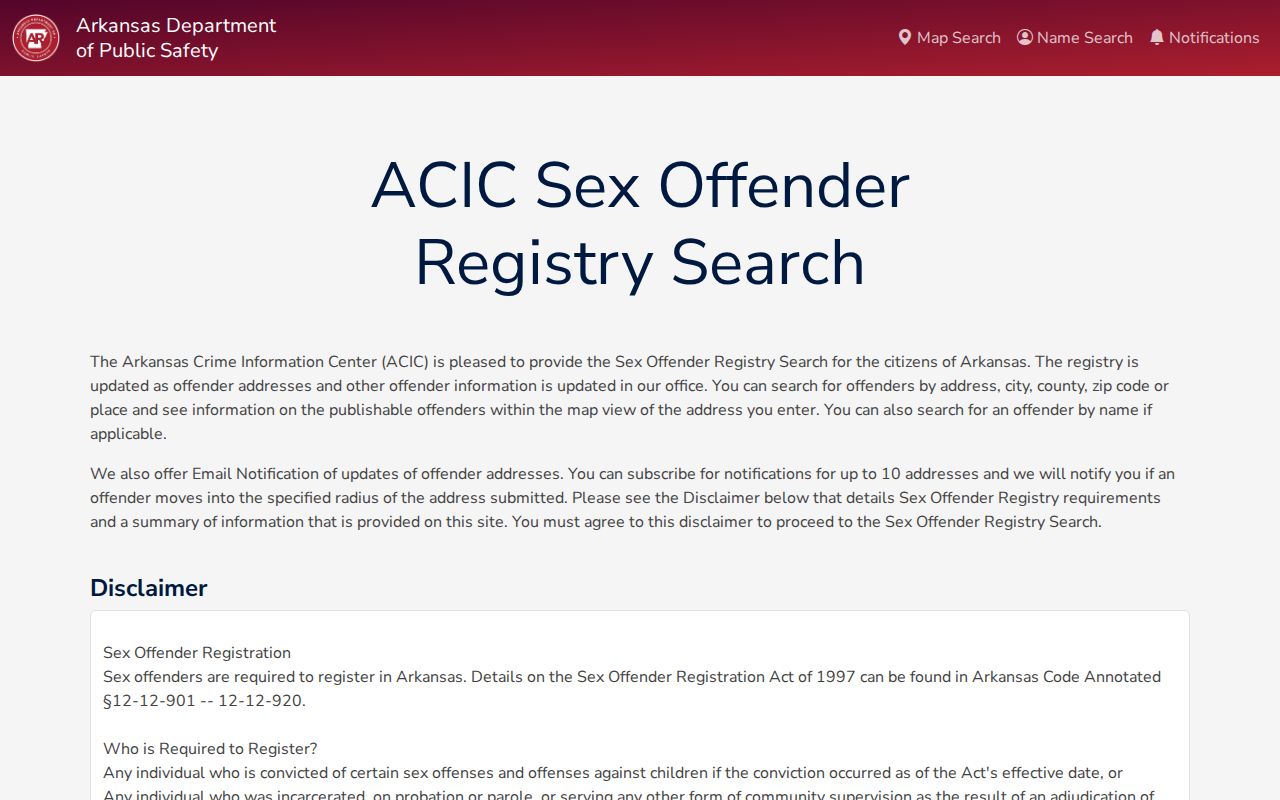
The search interface supports both identity-based and location-based review, which is important in a county where records may involve Malvern, Rockport, Perla, or rural addresses.
What a Registry Profile Shows
A registry profile is a public-notification record, not a full court file. It may show enough facts to identify the registrant, understand the assigned risk level, and see the published address or map point. It should not be read as the whole criminal case record. Court filings, sentence details, and later motions may be in Search ARCourts or with the Circuit Clerk instead.
| Name and aliases | Public identity fields used to match the registrant, when publishable. |
|---|---|
| Photo and physical description | Image and descriptive details such as age, physical traits, scars, marks, or tattoos when shown. |
| Registered address | Published residence or map location, subject to accuracy limits and legal publication rules. |
| Offense and statute | Conviction or offense information where the registry makes it public. |
| Level or tier | Arkansas risk level from 1 through 4, with publication tied to state rules. |
| Registration status | Compliance, absconded status, agency, jurisdiction, or verification information when displayed. |
Hot Spring County List Limits
The sheriff's local list is easy to misunderstand. It is local, but it is not complete. The sheriff's disclaimer says the list is not a complete list of offenders required to register with the Hot Spring County Sheriff's Office. It also warns that addresses may be in error due to offender reporting errors or public-record errors. That matters when a user is comparing the county list to the ACIC state registry.
Treat the local list as a pointer. If the state registry and county list do not match, check ACIC first and then contact the sheriff's office about a local address issue. If the question is tied to an actual court conviction, use court records for the case file and the registry only for current public notification. A registry search and a criminal case search answer different questions.
Note: Local list gaps do not mean a person is unregistered, and a registry profile does not replace the original court record.
Registration Requirements and Levels in Arkansas
Arkansas assigns registered sex offenders to risk levels through the Sex Offender Screening and Risk Assessment Program coordinated by the Arkansas Department of Correction. ACIC states that offenders who fail to submit to assessment are assigned a default Risk Level 3. Public web access then depends on the assigned level and Arkansas publication rules.
| Level | ACIC Description | Public Web Note |
|---|---|---|
| Level 1 | Low Risk | Not all Level 1 information is published to the general public web. |
| Level 2 | Moderate Risk | Recent law changes added public access for some Level 2 offenders where the offender was 18 or older and the victim was 14 or younger at the offense time. |
| Level 3 | High Risk | Must be available on the Arkansas state website. |
| Level 4 | Sexually Violent Predator | Must be available on the Arkansas state website. |
Registration duration and verification duties depend on the underlying offense, court order, risk assessment, and later compliance status. For Hot Spring County, the public searcher should focus on the published level and status, then verify with ACIC or local law enforcement when a listing affects safety planning.
Level 2 Public Access
Level 2 offenders are a common source of confusion because public access is not as simple as "all visible" or "all hidden." The research notes a recent Arkansas change that added public access to Level 2 offenders in a specific category: the offender was 18 or older and the victim was 14 or younger at the offense time. Other Level 2 data may not appear the same way.
That rule is one reason a Hot Spring County sex offender check should use the Arkansas registry instead of a copied list. ACIC applies state-level publication rules. A local page, saved screenshot, or old printed list may not reflect current publication categories. When a risk level appears incomplete or a name does not show, avoid guessing. The correct follow-up is ACIC or the local law-enforcement agency with jurisdiction.
NSOPW Cross-State Searches
The national layer is useful when the person may have moved into or out of Arkansas. NSOPW.gov, the Dru Sjodin National Sex Offender Public Website, allows public searches across participating state, territorial, and tribal registries. It can search by name and by location fields such as ZIP, city, county, and state.
For Hot Spring County, NSOPW is a second layer rather than a replacement for ACIC. Use it when a person has recent ties to another state, when a search near the county line is not enough, or when a name does not appear in Arkansas but the concern is broader than Arkansas. Then return to the state registry that owns the result for profile details and local verification.
The NSOPW search page image shows the national search path that can sit beside an Arkansas registry check.
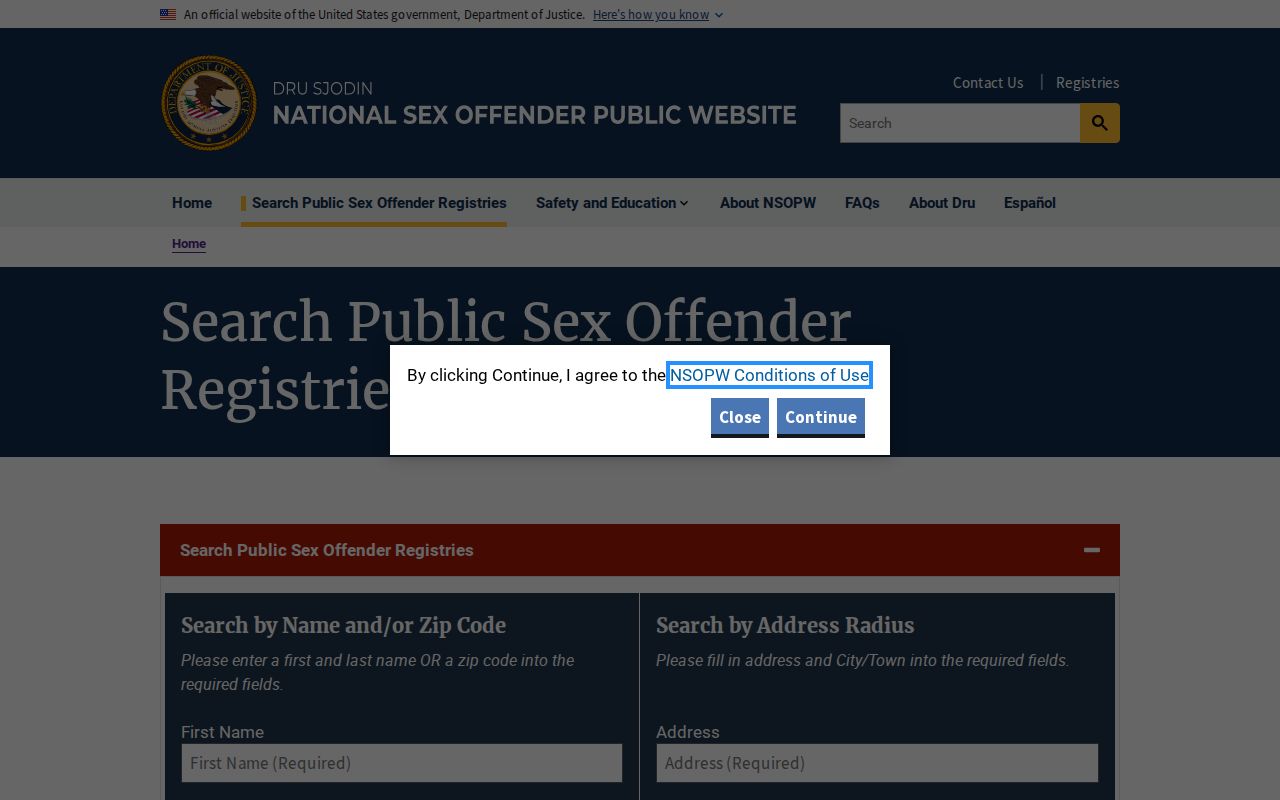
That national screen is most useful when a Hot Spring County address search does not answer a cross-state movement question.
Failure to Register Penalty
ACIC states that failing to register, failing to report address changes, or failing to comply with assessment is a Class C felony. That is a separate criminal-law consequence from the public search itself. The registry may show compliance or status details, but a new failure-to-register case would follow the ordinary criminal-record path through arrest records, court filings, and final disposition.
If a Hot Spring County registry entry looks noncompliant, do not confront the person. Contact the law-enforcement agency with jurisdiction or ACIC. For a court outcome, use Search ARCourts or the Hot Spring County Circuit Clerk. For custody, use the sheriff's jail roster or state custody tools, depending on where the person is held.
The Federal Bureau of Prisons inmate locator appears in the manifest because custody can move outside Arkansas when a federal case is involved.
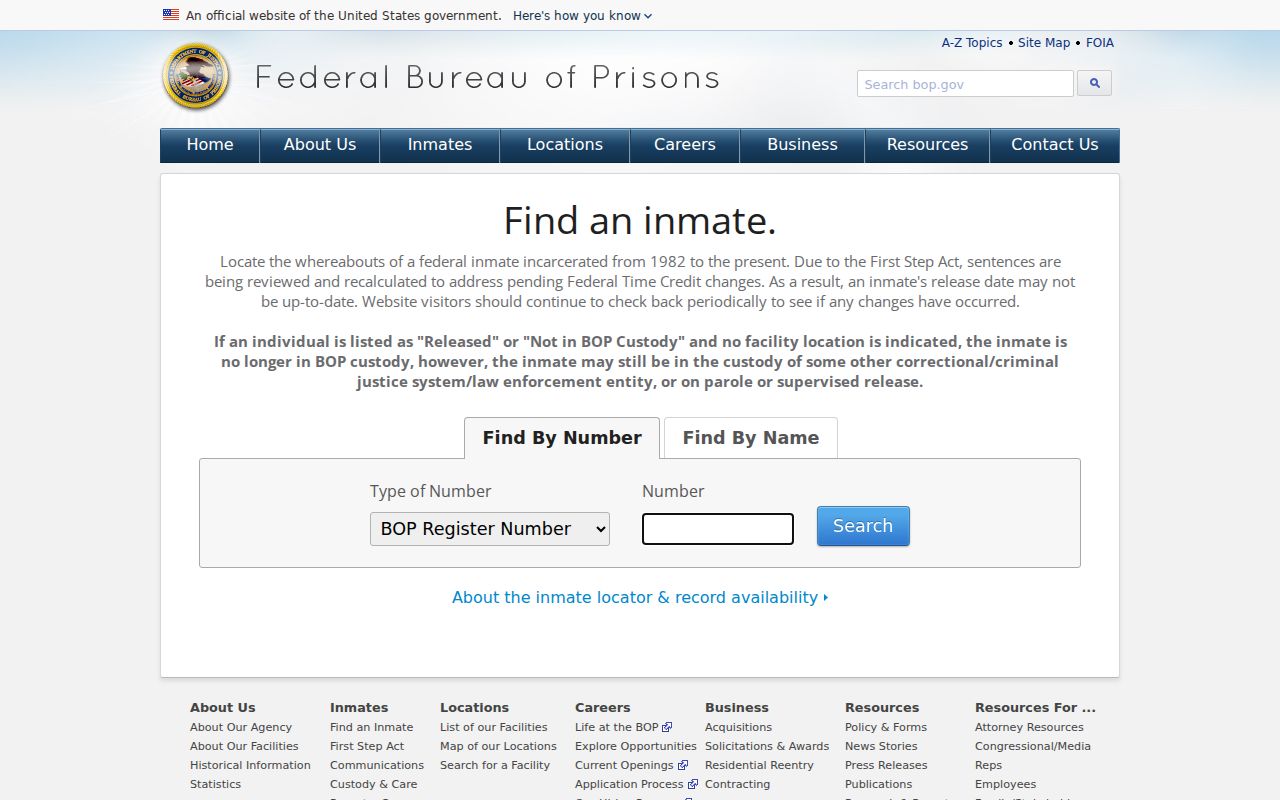
The federal locator is not a registry, but it is relevant when a registry-related concern turns into a custody question outside county or state systems.
Lawful Use and Community Notification
Registry information exists for public protection and community notification. It can help a household understand who is publicly listed near an address, help a neighborhood verify a notice, or help a person check whether a profile is tied to Hot Spring County. It is not a license for threats, harassment, retaliation, or public shaming.
Arkansas's ACIC sex-offender information page ties the registry to the Sex Offender Registration Act, Ark. Code Ann. sec. 12-12-901 through 12-12-920. The same research file notes that Arkansas public-access laws, court rules, and repository rules place limits on other criminal-history material. Keep the registry in its lane: public notification, with verification from the official keeper.
Misuse warning: Registry information may not be used to harass, threaten, or intimidate a registrant or household. Misuse can create criminal or civil exposure, and Arkansas registration law should be read with ACIC and local law-enforcement guidance before anyone relies on a listing.